
Description
Julian Johnson
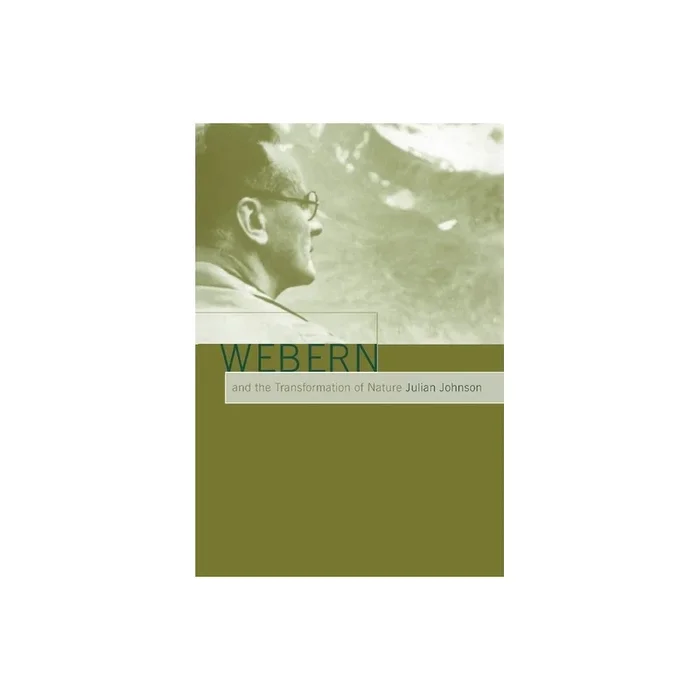
This book is about the way in which a society constructs an idea of nature and the role that art, and specifically music, may have in the articulation of that idea. It explores such an idea in relation to Webern, whose music has been almost exclusively portrayed as abstract and autonomous. In opposition to the exclusively formalist concerns of post-Darmstadt Webern reception, this book argues that abstraction in music is understood fully only in relation to the material, historical reality from which it abstracts, and that musical modernism is more fully understood by exposing its underground roots in the aesthetics of romanticism.
Bibliographic Details
1 table 15 music examples
Contents
- Acknowledgements
- 1. The social construction of nature
- 2. A maternal landscape: the early works (1899–1905)
- 3. Paradise lost: the Dehmel Lieder to Op. 11 (1906–1914)
- 4. The transformation of memory: the vocal works Op. 12-Op. 19 (1914–1926)
- 5. Ideal landscapes: the serial works Op. 20-Op. 31 (1926–1943)
- 6. Webern, nature and modernism
- Appendices
- Notes
- Select bibliography
- Index.
| Language | English |
|---|---|
| ISBN | 9780521661492 (0521661498) |



Reviews
There are no reviews yet.